IAQ-Office

As measurement of indoor air quality (IAQ) parameters have gotten better, faster and cheaper we’ve taken advantage of this to instrument our offices.

Read more to see why everyone should care about IAQ.
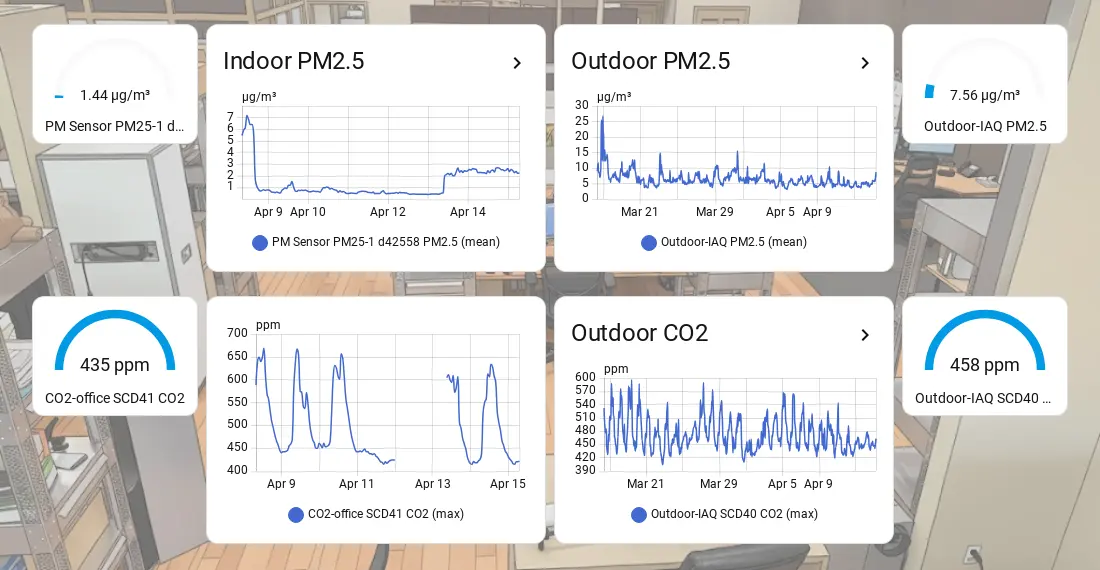
You’re looking at data from our office in Medford, Oregon. The data is sent to our servers every 5 minutes. (refresh page to see newest data)

Carbon Dioxide (CO2):

Particulates:

  • We are measuring PM2.5 which in our case is the weight (micrograms) of particles less than 2.5 microns per cubic meter
  • These small particles (from diesel, smoke, etc) are particularly bad for us because they make their way into our lungs and are hard to expel
  • Kitchen activity (frying, searing, burning fuel) are also big contributors to indoor particulates
  • If you have low levels of particulates, you’re probably cleaning the air of aerosols. Aerosols are the primary vector for air borne viruses (think influenza, colds, covid) https://pmc.ncbi.nlm.nih.gov/articles/PMC8721651/
  • How we fixed our particulate problems
    • MERV13 filters on all outside air coming into ERVs and HRVs
    • MERV13 filters on all air handlers
    • CR style filter boxes situated throughout the building
    • HEPA filtration units
    • Make sure that you have good kitchen exhaust to reduce particulates from cooking

What can you do ?

Footnote on ERVs and HRVs

  • The smart way to fix CO2 problems is to use Energy Recovery Ventilators (ERVs) or Heat Recovery Ventilators (HRVs)
  • You can also just open a window, but this will lead to loss of conditioned air
  • ERVs and HRVs minimize loss of conditioned air by recovering the heat or cool, while still bringing in fresh and filtered air

Note on our measurements

We measure particulates and carbon dioxide levels (inside and outdoors). A thorough analysis of air would include volatile organics (VOC’s) and other pollutants, which is beyond the scope of our measurements. If you have good values for CO2 and particulates, and you don’t live next to an airport or other concentrated pollution source, your other IAQ values will most likely be just fine.
Going Electric At Our Warehouse

We are always looking for ways to minimize our carbon and environmental footprint, and we found a big one at our warehouse in New York State.

Prior to purchasing the warehouse it was heated with furnaces fed by large propane storage tanks on the property. There was no cooling. Heating large spaces in a cold climate is very energy intensive. If we wanted to add cooling, our energy costs would be headed in the wrong direction.

Stage 1: Problem Analysis & Potential Solutions

Propane is one of the more expensive fuels out there, since it has to be delivered by truck. The goal was to use electricity and going down that path led us to heat pumps (hey we sell them !) and we did the math on making our own electricity. Solar panels are relatively inexpensive and have an excellent ROI (return on investment).

We adopted a multi stage plan to first reduce our carbon footprint and then make sure our costs were equal to less than the “fossil approach”.

Stage 2: Install Heat Pumps

Installing the air handlers.

Note the oversized filter box.

Completed heat pumps

It snows a lot in this part of the country, so we built snow covers.

Stage 3: Get a New Roof

It makes sense to get a new roof, when you’re installing 30 year lifetime solar panels. Thank You to the folks at S.D. Carruthers Roofing for doing a great job on the roof and adding an extra layer of high R-value polyisocyanurate insulation underneath.

Stage 4: Get Solar

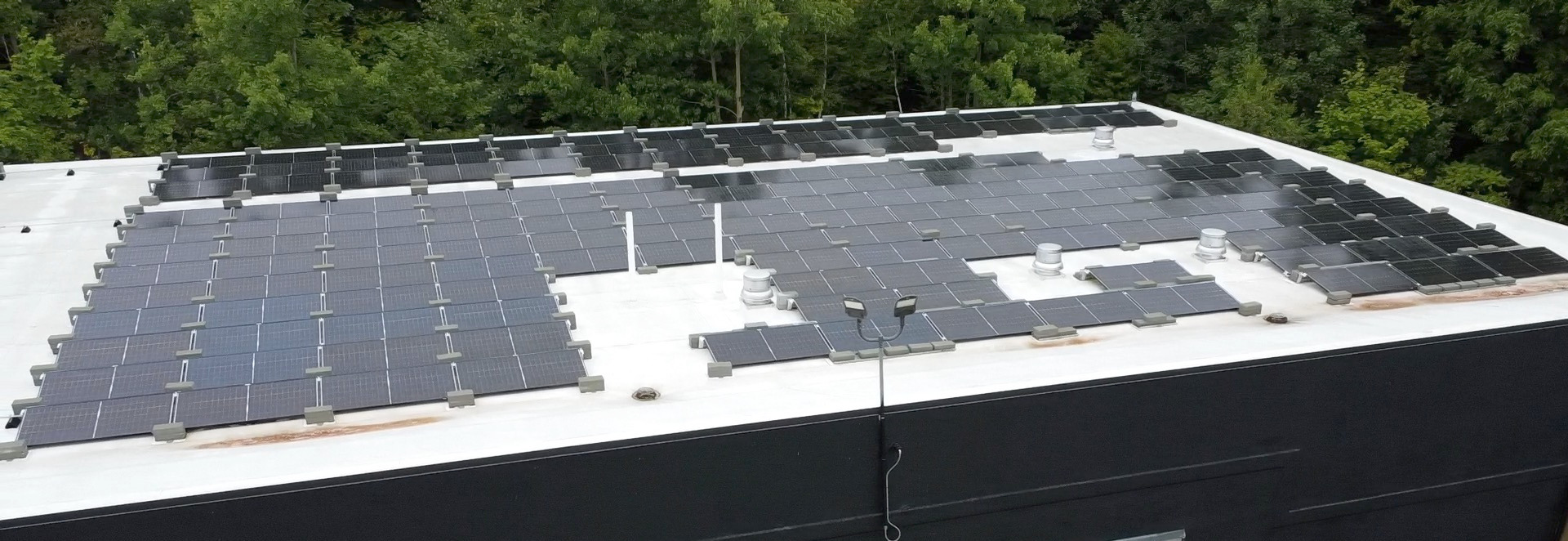
Once we finalized our requirements and got approval from the utility, the 120 kW of solar panels went in.

Conclusions:

  • CO₂ avoided
    • Solar electric is about as “home grown” as it gets. Although one may argue about the embodied energy in producing the panels, there will be 20-30 years of no carbon from our warehouse operations. The box shows our first 8 months of CO₂ saved.
  • Indoor Air Quality
    • Warehouses suffer from dust from cardboard operations. Our own filter boxes were installed on each air handler to allow for good filtration (MERV13) and long intervals between filter changes (6 months)
  • Comfort
    • Heating performance with the heat pumps has been as good as the propane furnaces.
    • Since we added cooling (free with heat pumps), summer comfort has been much improved.
  • Cost Savings
    • Great ROI on the system.
    • Zero electrical costs for 6-8 months, with dramatically lower bills anticipated for winter

Acknowledgements

Genie Solar: Great job at offering options and providing guidance on incentives.

3rd Roc Solar: Great install and responsive to any issues.

USDA: Thank You very much for the REAP grant.

Peter Caldwell (Great Electrician)

Thomas Brunet (Consultant)

Technical Notes:

Demand Charges: Although we will make enough electricity from the solar panels for our needs, commercial electrical rates include something called demand charges. We have had to distribute our electrical usage over a 24 hour period to avoid much of this. In particular, we actually heat at night to avoid turning on all our heat pumps simultaneously.

More information: If you would like to explore your path to “energy indepence” please contact me at www.hvacquick.com (ask for Neil Smith)

Dental Treatment Room (Operatory) Aerosol Removal Part II

The best way to remove aerosols created by dental procedures is to create a stream of air focused close to the source. Source capture as it’s known is more efficient since we’re pulling a concentrated source of contaminants. Each unit of air that you are paying for “works harder” in this manner.

From this point, there are 2 choices: exhaust the air, or recirculate it. Here’s a list of pros/cons for each system.

PROCON
ExhaustNo worries about viral and other contaminants being spread inside
Exhausts conditioned air
Requires Installation
Very Quiet
Can be designed with lots of airflow to provide a purge between patients
RecirculationRequires expensive HEPA filters
More expensive
No Installation Required

The system shown below exhausts to the outdoors.

Typical Aerosol Exhaust System Installed in Attic or Interstitial Space (click image to expand)

Let’s go through the parts starting from the intake (left to right):

  • Intake cone: A plastic cone to pull aerosol from around the patient’s mouth
  • Self supporting flex duct: Typically a 4″ diameter flexible duct that “self supports” – holds its last position
  • Thimble: This is just a neat way to allow the inside duct to be removed and cleaned without system disassembly
  • Flexible insulated duct: This duct has a plastic liner and can be easily installed
  • Filter box: The CFB-6-OS contains a prefilter and a MERV15 filter. Even though we’re exhausting outdoors, it’s good practice to remove most of the particulates. The MERV15 filter is in the range of a N95 face mask.
  • Inline fan: We really like this powerful fan that is capable of high static pressure (sucking ability) and high flow (CFM or cubic feet per minute). The fan can be adjusted for flow for two modes: a) Patient aerosol removal b) Room purge between patients [VERY USEFUL AND PROBABLY WILL BE CODE MANDATED]

References

More Information

Dental Treatment Room (Operatory) Aerosol Removal Part I

There is an invisible problem in the dental profession which has the potential to be harmful to medical professionals, patients, office staff and family members. Indoor air within dental offices may contain unhealthy and infectious airborne particulate resulting from transmittable bacteria and viruses. Dental offices are high traffic, publicly accessible, commercial spaces and the multiple daily interactions between patients and staff, can introduce bacterial, viral and fungal infections into the air. Ultrasonic instruments, along with the constant cleaning and disinfection of contact surfaces can create bio-aerosols which contaminate the indoor air and degrade the air quality of air in a dental office.

Risk vs. Income — Looks at Dentists !
(courtesy https://www.visualcapitalist.com — click image to expand)


Indoor air quality contamination has been a known concern for many years, especially within hospital and dental manufacturer’s environments. Operating rooms of all hospitals and surgery centers have a cooler and filtered positive air flow within each surgical suite. Manufacturers of surgically implanted hardware (orthopedic) and dental implants have source capture devices on their equipment and “Clean Rooms” as part of the final sterilization process to preserve the surfaces of the implants before packaging. The manufacturers of these products invest heavily in the design of air quality controls to ensure they meet industry, regulatory and governmental standards and to protect their staff and the end user of their final product.


Source capture of dental bio-aerosols effectively collects airborne contaminants that are often present in dental offices; including such as oral aerosols, ultra-fine particles, disinfectant odors, mercury vapor, drill aerosols and abrasion powder and provide an added layer of safety by improving air quality in the immediate vicinity of interaction between individuals. This “source capture” feature helps protect doctors, dental technicians and patients alike.


During a regular dental visit, patients and providers are exposed to bio-aerosols which can originate from contaminated patient care items. In dental offices, the oral cavity constitutes the highest reservoir of infectious organisms with over 350 different types of bacteria. During dental treatments, the use of high and low speed instruments drilling into teeth, bones and tissues create hazardous bio-aerosols. Aerosols containing microbes from the saliva, blood, and sub-gingival fluids are dispersed in the air. The dispersal of fine droplets, which may contain pathogens, can stay airborne for hours. These pathogens are easily inhaled and become a potential source of infection for everyone within the dental office. The amount of time these droplets remain suspended in the air, how far they travel, and their level of contamination should be a concern for everyone, and especially when treating highly vulnerable patients – children, pregnant women, older people, and patients with COVID specific co-morbidity factors, hypertension, obesity, COPD.


A typical dental office can see 40-50 patients in a day. These patients are another source of air pollution from the tiny particulates of skin which that are continually exfoliated from the skin. Researchers believe that the majority of Staphylococcus aureus, one of the leading causes of infection, is transported mainly on these shed skin particles, readily disturbed from floors and other surfaces as microscopic specks of dust which thousands of pathogens use as a transmission vehicle.

Despite the SARS (Severe Acute Respiratory Syndrome) and MRSA (Multi-Resistant Staphylococcus Aureus) epidemics which profoundly affected healthcare mortality and infection rates, concrete actions to prevent the spread of aerobiological viral and bacterial infections have not been taken.

The Occupational Safety and Health Administration (OSHA) mandates that every employer, including medical and dental offices, has a general duty to protect employees. OSHA industrial hygiene includes references to ventilation and replacement air for the protection of the workers. There should be adequate ventilation by either natural or mechanical means, in order that the atmosphere does not endanger the health and safety of workers. The replacement air shall be free from contamination with any hazardous dust, vapor, smoke, fumes, mist or gas. The discharge of air from any exhaust system shall be in such a manner so as to prevent the return of contaminants into any workplace.


Microbial air pollution is a health hazard and source capture filtration units can play a role in significantly reducing the transmittable bio-aerosols. In many medical and dental office environments, the most practical and convenient solution is to have source capture systems.

References

More Information

HEPA Filtration and COVID-19 Micro Droplets

In case you were wondering why we should wear a mask in public and filter the air around us, check out this demonstration of suspended micro droplets.

Micro droplets suspending in air from MixonK on Vimeo.

Our CFB HEPA Filters are currently being used by a number of hospitals to create negative pressure isolation rooms for COVID-19 patients. They are typically paired with an inline fan to exhaust the contaminated air from those areas, filter and then discharge it safely outside. Discharging the air without any filtration is considered risky since you are spreading/distributing the virus particles extracted from the patient areas. If you have questions on how to build negative pressure isolation rooms give us a call.

What is a HEPA?

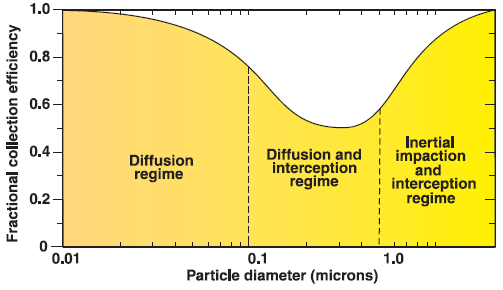
HEPA stands for high-efficiency particulate arrestance. To be classified as a HEPA, the air filter must remove at least 99.97% of particles whose diameter is equal to 0.3 μm. Classification at 0.3 μm is important because this is the weakest point in the filter’s performance – typical HEPA filtration efficiency increases for particle diameters both less than and greater than 0.3 μm.

Image courtesy of the National Institute for Occupational Safety and Health (NIOSH)

Virus particles, due to their small size, typically fall in the diffusion regime of HEPA collection efficiency. Specifically, the virus that causes COVID-19 is approximately 0.125 μm in diameter. That diameter is perfectly within the particle-size range that HEPA filters capture with great efficiency: 0.01 μm and bigger (see the NIOSH diagram above).

Want to ready more about HEPA and how they filter particles the size of viruses? We found the Submicron and Nanoparticulate Matter Removal by HEPA-Rated Media Filters by NASA study is a great source of reliable technical info. Page 7 of the paper has an excellent illustration of filter efficiency as a function of particle diameter for sizes 0.01 μm and above.

HEPA Filtration for Hospitals

How times change…

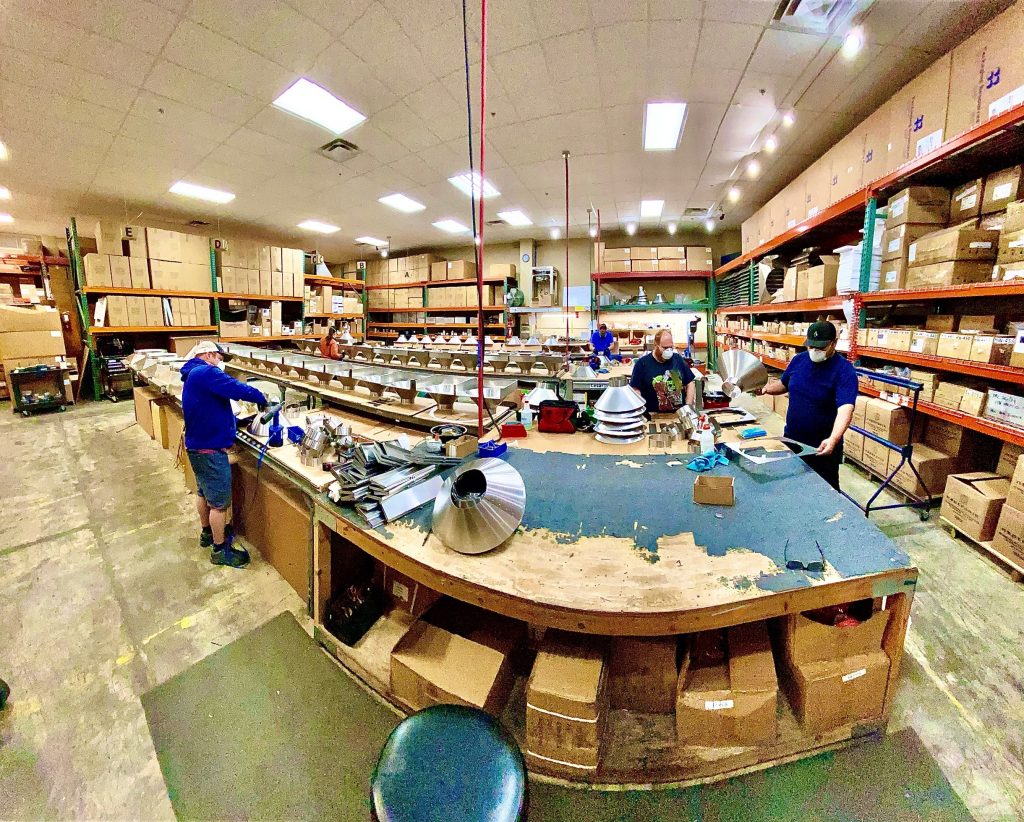
A few weeks ago our sister company AirScape Fans (airscapefans.com) was ramping up whole house fan production for the summer season. Now they are very busy making HEPA filtration units for hospitals, and yes, observing Covid safety protocols. Masks [check], distancing [check], good ventilation [check], doors open for extra air dilution [check], hand sanitizer [check], outdoor breaks in the sun [check]. They (as did we!) spent a lot of time writing procedures on how to stay safe.

Stay safe and healthy out there!

New Filtration Products Part 3

One Big Reason to Get a HEPA Filter

Panorama of a hilly expanse featuring a large smoke trail covering more than half of the visible sky.
 

HEPA filters stop the vast majority (99.7%) of airborne particles greater than 0.3 microns. Most of the time, you’ll never need a filter that stops even smoke particles, but when you do, we have what you need.

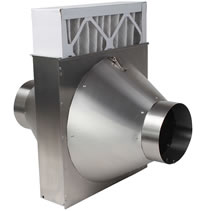
The CFB-HP is a filter box that is meant to be used with an external fan. We also have several HEPA filter/fan combination boxes, but here’s a few reasons why you would use an external fan:

  • You want to distribute air evenly throughout your house or office
  • Very low sound levels (talk to us about how to do this)
  • When paired with an EC (electronically commutated fan), the energy use drops dramatically
  • You may want to direct the clean air or filter air from a particular room or area
  • This filter box works well with HRV’s
  • To avoid smoke infiltration during smoke situations, one strategy is to pull outside air through this HEPA filter and pressurize your house with clean air.

As always, please feel free to call our technical sales people for any application assistance. 888-855-7229 or email us at sales@hvacquick.com.


New Filtration Products Part 1

Over the past 2 years we’ve been building filtration products, so maybe it’s time to announce them…

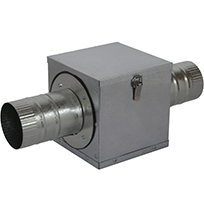
The first unit we have is our IFB series. This “Inline Filter Box” has a MERV6 filter and is meant for general purpose filtration.  MERV6 is considered a “better residential” level of filtration. [Here’s a good overview of MERV levels]

HVACQuick IFB Series Inline Filter Boxes

This filter box is commonly used for filtering incoming fresh air to a furnace or air handling unit. If desired, we can provide inline fans all the way from 100 CFM past 1200 CFM.

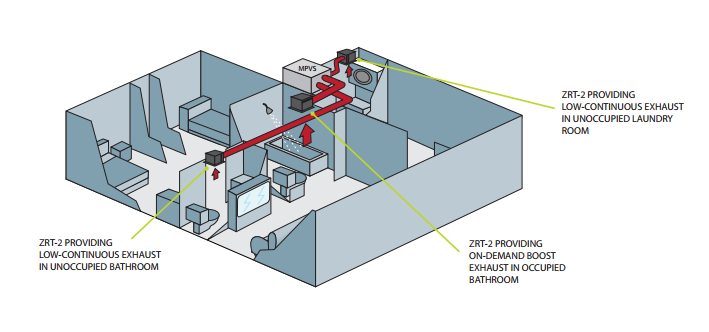
Get an effective whole-house IAQ system and on-demand boost ventilation in one kit

There’s an easier way to ventilate a house than installing separate fans for each bathroom plus a low-flow continuous ventilation system for the rest of the house. That’s a lot of installation time, several penetrations in the outside walls, and just too many systems to tie together and hope it all works. There’s good news though. There’s an easier way that not only cuts down on installation time, it also saves the homeowner money on energy bills.

American Aldes VentZone® IAQ systems are the only central ventilation systems available that provide precisely regulated whole-house Indoor Air Quality AND centralized bathroom fans in a single, highly effective and efficient ventilation kit. Each kit can provide low continuous IAQ ventilation and zone-based on-demand “boost” ventilation. Even better, they’re designed to meet ASHRAE 62.2, ENERGY STAR with IAP, LEED for Homes, and California Title 24 (CAL GREEN) standards.

Wondering how they work? The kits contain two Zone Register Terminals (ZRT-2s); these replace exhaust grilles in bathrooms and other high humidity areas like kitchens and laundry rooms. When a bathroom is in use, the ZRT damper opens for on-demand exhaust ventilation, yet the other bathrooms are not affected by the bathroom in use. Instead of the traditional exhaust fan, the kit has a centralized multi-port fan, so one fan can support 2-4 bathrooms. When the on-demand boost isn’t in use, the ZRTs still provide low-continuous airflow to keep the whole house ventilated.

Checkout the kits and pricing in our Zoned Exhaust Systems area:

http://www.hvacquick.com/products/residential/Bathroom-Ventilation/Zoned-Exhaust-Systems/Aldes-VentZone-IAQ-Continuous-Exhaust-Ventilation-Kits

Aldes VentZone System

Also, get more info from the American Aldes site:  VentZone® IAQ System