blog.hvacquick.com

All about ventilation and more…

Browsing Posts published by radek

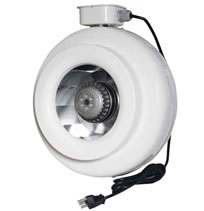
Another great addition to our lineup:  The Ostberg CK series inline hydroponics fans.

ostberg inline fans

Keep the temperature down and prevent stress on your plants through proper ventilation.  These puppies are designed for tough high static pressure applications such as carbon filters and humid grow room environments.  The tough baked epoxy coating and a 10 year warranty are icing on the cake.

http://www.hvacquick.com/products/residential/Fans/Hydroponics-Fans/Ostberg-Inline-Hydroponics-Fans

Recommendations for bathroom ventilation sizing can vary considerably between manufacturers and competing standards.  Some of the newer recommendations allow for low ventilation rates over long periods of time as opposed to the typical 8 air changes per hour. 

We prefer 8 air changes per hour as A MINUMUM and here is why:
When moisture is introduced into the bathroom it has an annoying tendency to get diluted into the entire air content of the space.  With low CFM (background) ventilation that moisture will eventually be exhausted, but in the meantime it will linger in the air and potentially condense on colder objects such as walls and fixtures.  Once it’s in liquid form on your walls it takes A LONG TIME to evaporate it again, not to mention the potential long term damage to the bathroom.

So what do WE recommend?
- minimum of 8 air changes per hour (more is better since the extra CFM typically comes at very little cost; nothing wrong with 10 or 12 air changes per hour)
- 100 CFM minimum per bathroom, no matter how small it is
- multiple grilles in larger bathrooms to pickup the moisture/smells close to the source
- keep the system quiet (inline fans!!) so that you will use it
- install a timer and leave the fan running for at least 20 minutes after leaving the bathroom

And remember, the standards are there for the builders and not necessarily for you.  Keep the moisture off your walls with adequate CFM and you will avoid mold issues.

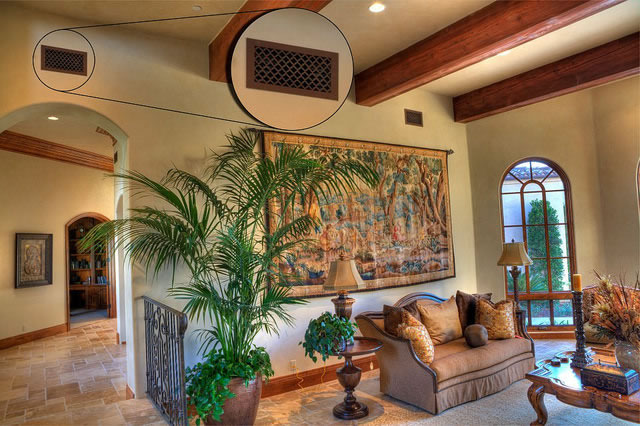
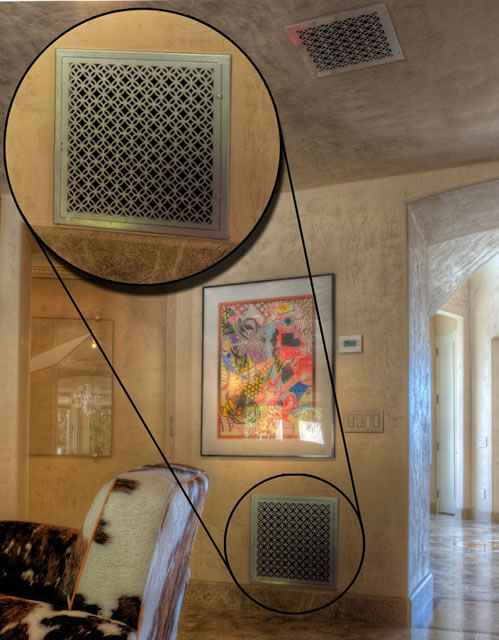
One of the most frequent calls we get is how to size/select our Dayus custom grilles.  The answer is simple:  The HOLE size.

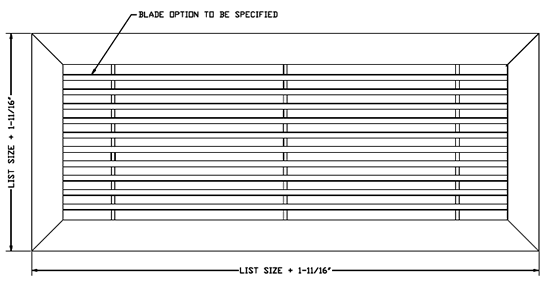
The measurement we need to build a grille is the size of the hole/opening (we call it LIST SIZE).  The hole size is the information entered into our website for pricing and ordering.  Dayus will build the grille slightly undercut to make sure the recessed portion of the frame slides nicely into the hole. 

The grille flange is roughly 1″ all around, giving you a finished flange to flange dimension 1-11/16″ bigger than the hole size (list size) you gave us.

Dayus Bar Linear Grille

Dayus grilles:
http://www.hvacquick.com/products/residential/Grilles-Registers/Grilles

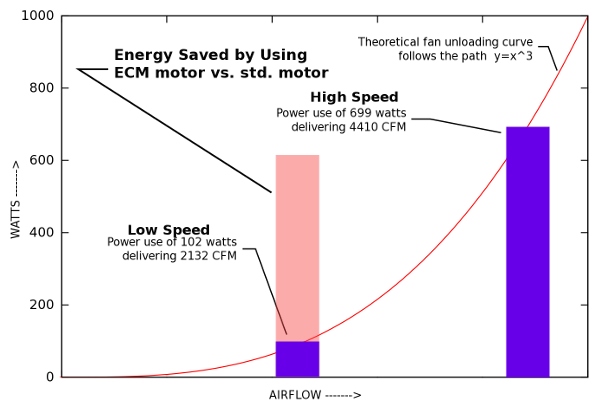
The latest trend we see in whole house fan design is the inclusion of ECM motors (electronically commutated motor).  Match that with an efficient blade and you get a great power profile and low noise.

Lets look at the AirScape 4.4e WHF whole house fan as an example.  The graph below shows the energy use profile of the 4.4e as compared to the theoretical efficiency of a fan system.  102 watts on low speed!!

AirScape ECM Fans

This tickles my engineering senses to the point I will probably upgrade my trusty AirScape 1.7 WHF with this new unit.  Smile

More on AirScape Whole House fans including the 4.4e WHF:
http://www.hvacquick.com/products/residential/Whole-House-Fans/Whole-House-Fans

ASHRAE 62.2 “Ventilation and Acceptable Indoor Air Quality in Low-Rise Residential Buildings” is the U.S. national minimum ventilation standard.  Note that not all states require it or may apply it differently so check with your local building codes to see what they require.

The standard requires low-level, continuous ventilation in a home using a whole-building fan or other ventilation system. Intermittent whole-building ventilation can be used as an alternative. Note that the standard uses the term “whole-building ventilation fan”, not to be confused with the term “whole-house fan” which is a different product (see AirScape whole-house fans on hvacquick.com.

To calculate the required flow for continuous ventilation, count 1 cfm (cubic foot per minute) per 100 square feet of floor area of the house. Next, multiply the number of bedrooms plus one by 7.5 cfm (cubic feet per minute). Then add those results together. For example, a 2,000-square-foot house with three bedrooms would require 50 cfm (20 cfm for the building area plus 30 cfm for the 3+1 bedrooms).

Typically HRVs or ERVs are used to meet the standard, but bath fans are acceptable as well.  There are additional sound and minimum cfm criteria that bath fans must meet in order to be allowable.  Fantech and S&P inline fans are a good option due to their low sound levels and available 62.2 control options:

http://www.hvacquick.com/products/residential/Ventilation-Accessories/ASHRAE-62-2-Controls

An online version of the standard is available at the ASHRAE website (www.ashrae.org).

Older leaky buildings permitted sufficient air change (fresh air infiltration) to remove pollutants (such as carbon dioxide, moisture, mold spores, formaldehyde from building products) by the natural forces of wind and stack effect.  Newer, tightly built homes do not allow this air exchange.

The best way to introduce fresh air into a home is through the use of an HRV or ERV.  These products allow for balanced ventilation, same amount of air is exhausted as brought into the house, and the majority of the heat/cool is recovered from the exhaust stream into the incoming air.  You get the best of both worlds — good air quality and low operating cost.

Heat Recovery (HRV) and Energy Recovery (ERV) units:
http://www.hvacquick.com/products/residential/Indoor-Air-Quality/Residential-HRV-ERV

Fantech heat recovery units

Why do we love solar attic fans?  How about easy install, long life, and no energy costs!  Its a great do-it-youself upgrade project or a quick easy job for the pro.

We recently added the AirScape solar attic fans to our lineup.  They are robust, look great and are well priced.  Significantly better than the el-cheapo big box store units… in our humble opinion…

A couple of different sizes and models are available:
http://www.hvacquick.com/products/residential/attic-fans/attic-fans-solar-electric/AirScape-Solar-Attic-Fans

Airscape solar attic fan

And some good news:  the cost of your solar attic fan and installation qualifies for a 30% tax credit under the U.S. Emergency Stabilization Act of 2009. Save your receipt, along with the handy residential certification form.

The AirScape hydroponics fans are here!

AirScape as315

Link to the site:
http://www.hvacquick.com/products/residential/Fans/Hydroponics-Fans

Remember, good ventilation helps to keep the temperature down and prevents any heat related stress on your plants.

Blog. Finally.

This is the start of our blog. We intend to write about topics from technical support, how to solve ventilation problems, and what we think is exciting in our world.