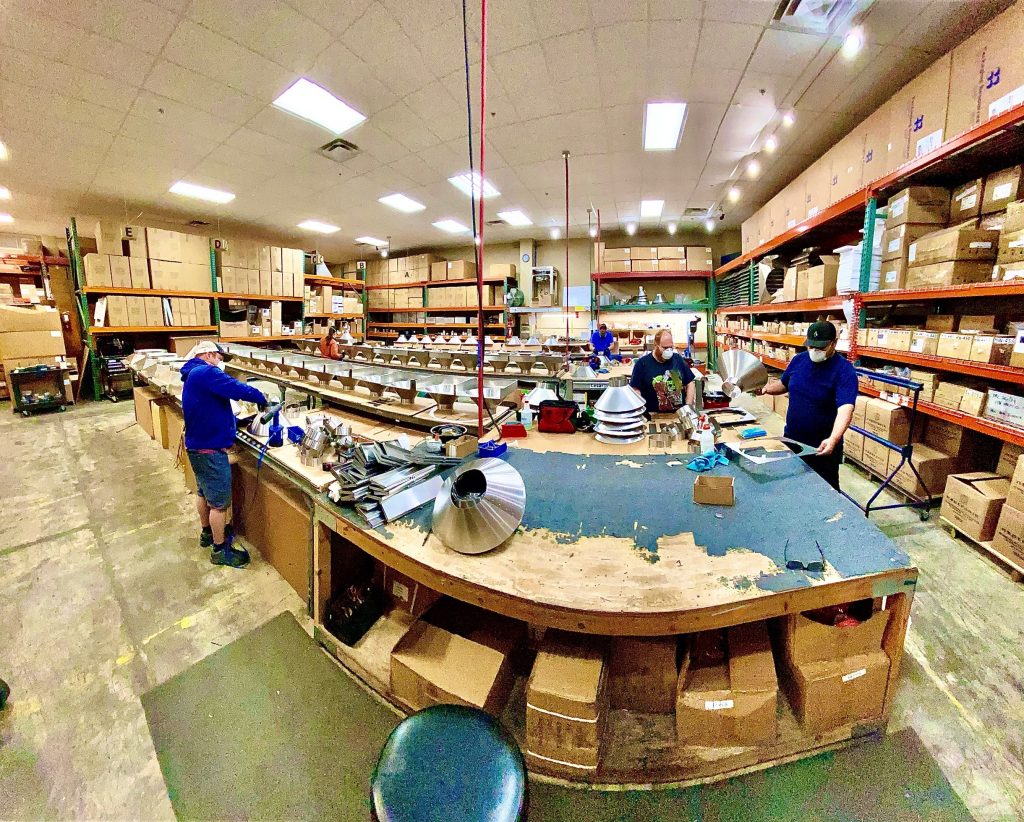
High Performance Room HEPA Filter Unit

If you’ve been following our blog entries about viruses, micropdroplets, and Covid-19, or just reading the news, you’re coming to the conclusion that air filtration is getting to be very important.

It’s important to cut the “viral load” or amount of viruses that one is exposed to, and micro droplets that can contain Covid can remain aloft for up to 10 hours.

Masking and source capture (see our blog on dental aerosols) are good ideas, but there are many reasons why we still want to filter our air. Masks are not 100% effective (nothing is), and people make mistakes.

Just the facts: Why Filtration?

  • Masks are not 100% effective
  • People are not 100% effective at masking
  • Microdroplets stay in the air for up to 10 hours
  • Toilets can be a source of pathogens (including Covid 19)

Just the facts: What does my filtration system need to do ?

  • Capture microdroplets and viruses
  • Have airflow capable of 12 + air changes per hour (12 ACH)
  • Filtered air should flow from high to low
  • Have directed vents to avoid stagnant areas
  • Be quiet
  • Efficient
Clean air should be delivered high and returned low to the unit.

How to calculate required airflow

Airflow in cubic feet per minute (CFM) = # Air changes per hour (ACH) x Room Volume / 60

Example: Conference room 10’x20’x12′, with desired 12 ACH. CFM = 12 x (10x20x12) / 60 = 480 CFM

Specifications

  • 2 Sizes: 500 CFM and 900 CFM
  • Low power use: 128 watts and 164 watts
  • Footprint of 18″ x 26″ x 72″ high (with casters)
  • Prefilter MERV11 with carbon impregnation
  • HEPA H13 (EU standard) 99.95% efficient, with individual test certificate.
  • HEPA is 24″x24″ x 12″ deep. This means it has a lot of holding capacity.
  • Electronically commutated motor (ECM), very efficient
  • Full range speed control with no motor hum (it’s ECM)
  • Customizable discharge: Front, Side, Top

Availability and Cost

  • We have a few of our initial batch available
  • We’re taking reservations for units to be ready in 6 weeks.
  • Check www.hvacquick.com for updated price and availability.

Pathogens in the Air: Droplets become microdroplets become aerosol

https://www.nytimes.com/2020/05/14/health/coronavirus-infection.html?auth=logi-email&login=email

Talking can launch thousands of droplets so small they can remain suspended in the air for ten hours for one micro particles.

Scientists agree that the coronavirus jumps from person to person most often by hitching a ride inside tiny respiratory droplets. These droplets tend to fall to the ground within a few feet of the person who emits them. They may land on surfaces like doorknobs, where people can touch lingering virus particles and transfer them to their face. But some droplets can remain aloft, and be inhaled by others.

Droplets become microdroplets and are formed by people by breathing talking, sneezing, coughing and toilet flushing. These tiny particles evaporate, stay afloat and do not drop down nor exhaust on their own.

How droplets become aerosols: https://www.cdc.gov/niosh/topics/aerosols/pdfs/Aerosol_101.pdf

When people breathe, cough and sneeze, they release respiratory droplets and smaller aerosols less than five millionths of a meter in size. Compared with respiratory droplets, the smaller aerosols can remain in the air for longer periods of time. The current data suggest the novel coronavirus is primarily transmitted through contact with larger droplets, but tiny aerosols can also harbor the virus and may pose a threat to people, especially indoors. To establish a sound defense against these aerosols, informed management of airflow and airborne contaminants could be critical.https://www.nist.gov/news-events/news/2020/06/nist-airflow-model-could-help-reduce-indoor-exposure-aerosols-carrying

Three factors seem to be particularly important for aerosol transmission: proximity to the infected person, air flow and timing.

Larger droplets are heavy and float down quickly — unless there’s a breeze or an air-conditioning blast — and can’t penetrate surgical masks. But droplets less than 5 microns in diameter, called aerosols, can linger in the air for hours. They travel further, last longer and have the potential of more spread than the large droplets,” Dr. Barouch said.https://www.nytimes.com/2020/05/29/health/coronavirus-transmission-dose.html“

Researchers from the National Institutes of Health used lasers to illuminate and count how many droplets of saliva were flung into the air by a person talking with and without a face mask. The paper was only recently published officially. When the researcher used a simple cloth face cover, nearly all the droplets were blocked.

This evidence is only relevant if COVID-19 is transmitted by droplets from a person’s mouth. It is. There are many documented super-spreading cases connected with activities – like singing in enclosed spaces – that create a lot of droplets.he light-scattering experiment cannot see “micro-droplets” that are smaller than 5 microns and could contain some viral particles.

How far does the virus move? And is it stable and concentrated enough at the end of its journey to harm someone’s health?https://www.unmc.edu/pathology/faculty/bios/santarpia.html

Solutions include source capture of airborne viral and bacterial pathogens (including influenza, COVID-19, SARS, MERSA) utilization filtration by increasing number of air exchanges through HEPA and MERV media, mixing with fresh air and exhausting externally.

Bringing in fresh air and stratify it utilizing high efficiency portable fan units to reduce viral and bacterial load in shared air spaces:

  • Conference rooms
  • Bars
  • Restaurants
  • Medical / Dental office waiting rooms
  • Hospital clean rooms
  • Patient Isolation Units
  • Doctor/Nurse break areas

Exhaust and Filtration in the time of COVID: Part 1 Bathrooms

We all know that aerosolized particles, particularly COVID-19 hang in the air for long periods of time.

Now, to add to the concerns, researchers have found that toilet flushing can trigger release of pathogens. In particular, COVID-19 carrying microdroplets from pre-symptomatic or symptomatic carriers can occur via fecal shedding .https://doi.org/10.1063/5.0013318 Ick !

How do we fix it ?

You guessed. Good. Bathroom. Ventilation.

Who knew. We did. This has been our job for the last 20 years.

Here’s a couple places to start:

More information:

Sources for further research:

HEPA Filtration for Hospitals

How times change…

A few weeks ago our sister company AirScape Fans (airscapefans.com) was ramping up whole house fan production for the summer season. Now they are very busy making HEPA filtration units for hospitals, and yes, observing Covid safety protocols. Masks [check], distancing [check], good ventilation [check], doors open for extra air dilution [check], hand sanitizer [check], outdoor breaks in the sun [check]. They (as did we!) spent a lot of time writing procedures on how to stay safe.

Stay safe and healthy out there!

Airflow Customization for Your Home – A Suncourt Solution

Winter is here and with it so are higher energy bills. Are you looking for ways to cut energy costs and save money? Is there a room or area of the house that you rarely use? Do you like certain rooms to be kept warmer or colder than the rest? If you answered yes to any of these questions, then it might be time for you to zone control your home with Suncourt ZoneMaster™ Fully Adjustable Motorized Dampers.

ZoneMaster Adjustable Motorized Airflow Control Damper

WHAT DOES A MOTORIZED DAMPER DO? Motorized Dampers are mounted in duct-work to control the amount of airflow in the duct in order to zone control your home. Zone control refers to regulating the temperature in one single room or space. In other words, zone controlling your home allows you to send heated or cooled air to an area of the house when you need it, when you want it.

WHY DO I WANT TO ZONE CONTROL MY HOME? Increased comfort, control and lower utility bills. Would you control your entire house with 1 light switch? No! So why would you control the temperature for your entire home with one thermostat?

GIVE ME AN EXAMPLE OF HOW I WOULD SAVE MONEY: Why heat a guest room that you only occasionally use to 70°F all winter long, or cool it to 76°F all summer? Keep it instead at 55°F in the winter and 85°F in the summer. Same story for a bedroom. Like to sleep in a 64°F bedroom and keep the rest of the house at 70°F? During the cooling season you may want the room for the baby a little bit warmer than the rest of the house. The possibilities are endless.

HOW MUCH MONEY COULD I SAVE? Zone controlling a home can save homeowners up to 30% on a typical heating and cooling bill, according to the US Department of Energy. It is estimated that heating and cooling makes up 40% of the monthly energy bill.

WHAT MAKES SUNCOURT MOTORIZED DAMPERS DIFFERENT THAN THE REST? Suncourt’s patent pending adjustable damper has 0°- 90° adjustment capabilities for BOTH powered and unpowered positions providing full control of airflow to any specific room. A safe, UL listed 24 VAC 15 VA stud mount transformer is included with each damper sold by Suncourt for ease of installation. Suncourt dampers are proudly made in the USA.

WANT TO LEARN MORE?
Suncourt’s website: www.suncourt.com
ZoneMaster Motorized Damper Product Overview video: https://youtu.be/U6aP6SL6Mlo
ZoneMaster Motorized Damper Product Installation Video: https://youtu.be/ZSxEgMHDpzg
Follow us on LinkedIn: https://www.linkedin.com/company/suncourt-inc/

The Stack Effect

Do you feel like your home doesn’t retain heat well, or is just plain cold and drafty? Are your energy costs during the winter months out of control? It could be because all your heat is escaping through your attic.

Improper sealing and insulation of the attic space in a home can lead to a great deal of your warm air escaping. It is known that heat rises, so this makes sense. Heat rises to the highest point in a confined space, the same as it would in a hot air balloon to make it rise.

As warm air escapes out the top of the house, the negative pressure created by this action sucks cold exterior air in through lower areas of the house, often times the basement and crawl space areas. This occurrence is known as the stack effect (also called the chimney effect) and can be the primary culprit in loss of warm air in many houses that haven’t had energy-saving upgrades.

Properly sealing the attic can help your home retain much of its heat. In addition, your home should have controlled ventilation to keep the air fresh and reduce pollution in your home. This can be attained through HRVs or ERVs or other ventilators.

HRVs and ERVs are essentially mechanical ventilators, but with a heat exchanger. This allows them to transfer heat between air streams, allowing for proper ventilation without sacrificing efficiency. They can take some of the load off your heating and cooling systems because of how they pre-warm and pre-cool air before it enters your home. HRVs can remove stuffy air from rooms with limited airflow and ERVs reduce humidity in the summer and help retain moisture in the air in the winter.

How HRVs and ERVs work.

Keeping a good temperature in your house, while properly ventilating is a delicate balance, but this is why there are so many products on the market to help you achieve the correct ratio, while also saving on energy.

New Product from Vortex Powerfans

Inline fans are installed in ducting and generally used to exhaust warm air out of your home or business, or boost airflow. Because they are engineered to work with ducting they will retain a greater percentage of their advertised capacity in comparison to basic extraction fans.

VMF800 Fan

The Vortex Powerfans VMF series are specifically designed to maximize the airflow performance with minimal noise levels in a small, compact housing. These fans incorporate a powerful mixed flow impeller and internal air vanes located at the discharge end of the fan housing. This impeller and guide vane combination provides a smooth laminar air flow which in turn minimizes turbulence and noise and generates an excellent air flow to static pressure performance ratio.

VAT800 Fan

Vortex Powerfans VAT series inline fans are axial in-line fans ideal for boosting airflow. These compact, powerful and quiet fans come completely wired with junction box, strain relief and power cord. Light weight and easy to install, they are fluted on both ends to ease connection to ducting.

Benefits of an inline are that the fan is located further away in the roof space and not directly above you. Furthermore if your roof space is well insulated its one of the quietest ventilation solutions available. Inline fans are also available in large sizes with very high power motors. Quite often this type of power is not available from a standard ceiling mounted or wall mounted extraction fan.

Fantech Pro and Pro Plus Series

Efficiency, quiet operation and ease of installation characterize both the PRO and PRO PLUS series. Both series are certified to the rigorous California Title 24 building energy code, as well as ETL/c-ETL, HVI, and Energy Star standards. The PRO Series operates at just 2.0 sones while the PRO PLUS is barely audible at 0.5 sones.

Sound levels are rated in sones where the lower the rating number, the quieter the fan. Typical economy fans are rated at about 4.0 sones or more. One sone is equivalent to the sound of a quiet refrigerator and a quiet bathroom fan will be rated at about 1.5 sones or less. This makes the PRO PLUS one of the most quiet bathroom fans on the market.

PRO Series offers three models with a ceiling grille and damper for airflow of 80, 100 or 150 CFM. The PRO 80 & 100 fans have a unique plug and play concept that allows you to add accessories such as a humidity sensor and LED light without changing the fan.

PRO PLUS has adjustable CFMs 80/90/110/140 with a ceiling grille, backdraft damper, humidity and motion sensor. It uses 6″ flexible duct. The product is provided with an adjustable 12-24″ bar hanger for ease of installation.

CFB and Balanced Residential Make-up Air System

We have added videos on how to assemble our CFB and unboxing our Balanced Make-up Air System components. It is part of our ongoing goal to share new and interesting content and information to help you with your next project. What is a CFB? What is a Balanced Residential Make-up System? Lets break them down for you.

CFB Series MERV-13 Inline Filter Boxes

A CFB filter box is a high-performance solution for any application requiring in-line filtration. Constructed from 5052 H32 aluminum, the CFBs holds a standard 4″ filter and are designed to fit either 6″, 8″, 10″ or 12″ diameter duct. The lid attaches securely with latches, and opens easily for quick filter replacements. MERV-13 filters are included with every unit, but you can also upgrade to a MERV-15 filter. The higher the MERV rating the better the filtration and the cleaner the air will be in your home.

A balanced make-up air system is designed to “make up” the air in your interior space that has been removed due to process exhaust fans. This type of HVAC solution pulls in fresh, tempered air from outside your building to replace existing air that cannot be recirculated. The International Residential Code (IRC) requires that makeup air be provided for kitchen hood exhaust systems with a capacity of 400 cfm or greater. Our balanced make-up air system can be customized to fit your needs with silencers, electric heater for cold climates and wall/roof caps.

Both provide better air filtration for your home to keep the air clean of allergens, smoke odors and particulates in the air, as well as provide the in-home air circulation that you need. You can check out our videos by clicking the links below.

CFB Assembly Video: https://www.youtube.com/watch?v=Qkl7OS8g-hI

Balanced Make-up Air System Video: https://www.youtube.com/watch?v=mcLffEHe58c

Vine Thermostats New and Improved

Model TJ-919

Vine Smart Home has improved on its thermostat design with a touchscreen display and remote capabilities via a WiFi App interface!

Vine thermostats put comfort, convenience and control in your hands. The Vine Smart Thermostat offers a bright colored 3.5″ or 4.5″ LED touch screen, large classic dial, programmable nightlight and a friendly UI. Each day can be customized with different options to ensure optimal comfort around your schedule. Download the app on your smartphone to control the Vine Smart Thermostat on the go. They support both Android and iOS devices and now come Alexa and Google Home compatible. On average consumers save approximately 23% annually off their energy bill with the scheduling program to lower or raise temperature during peak and off peak times of the day. Settings and schedules are saved on the cloud, so your preferences are backed up in the case of a power outage.

Receive up-to-date weather reports broken down by the hour or as broad as a 5-day forecast. Set up a daily program to optimize your home’s temperature to meet your daily schedule and lifestyle needs. Receive alerts for severe weather conditions, excessive temperatures, reminders to alter your HVAC equipment filters, etc.

Model TJ-610

Features:
– Alexa and Google Home compatible!
– 3.5″ and 4.5″ color LED touch screen
– 2 stage Heat (with Aux/Emergency heating) and 1 stage Cool, Heat Pump
– Programmable nightlight
– 7 day/ 8 period programming
– Wi-Fi enabled with iOS and Android Apps (control remotely)
– Power Source: 24VAC (20V~30V AC)
– 3 year warranty